
Semantic Image Segmentation
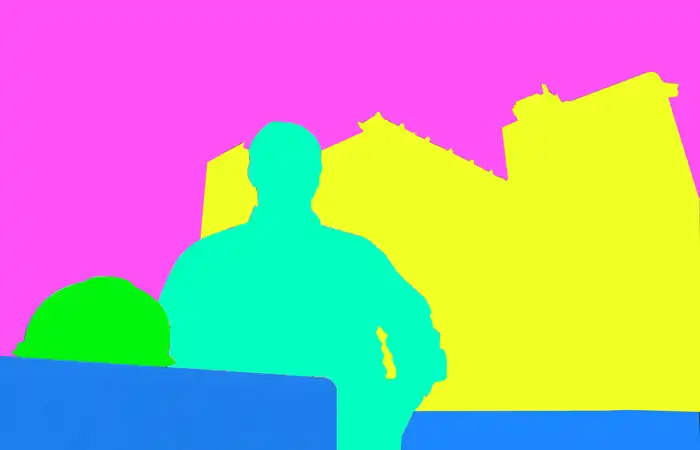
Semantic segmentation labels every pixel of an image, assigning a class to it (e.g., car, road, sky). This technique enables AI systems to comprehend the entire scene’s context, essential for autonomous vehicles, medical imaging, and urban planning where environment understanding is critical.
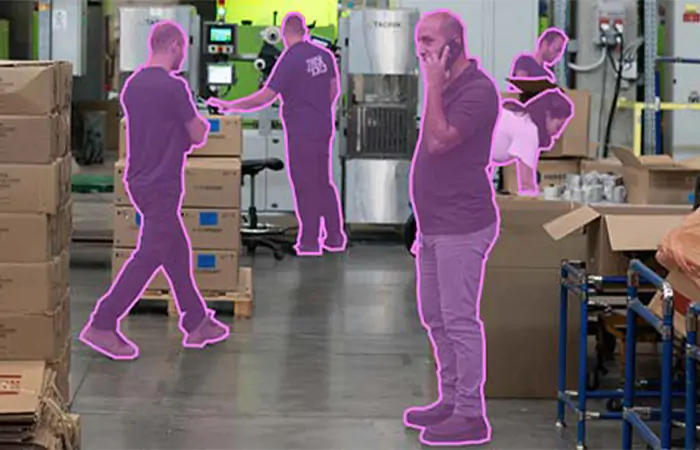
Our Image Annotation Tools And Techniques
We offer specialized image annotation services, utilizing advanced techniques to deliver precise and efficient results for object detection, segmentation, and AI-driven applications.
Bounding Box Annotation (2D & 3D)
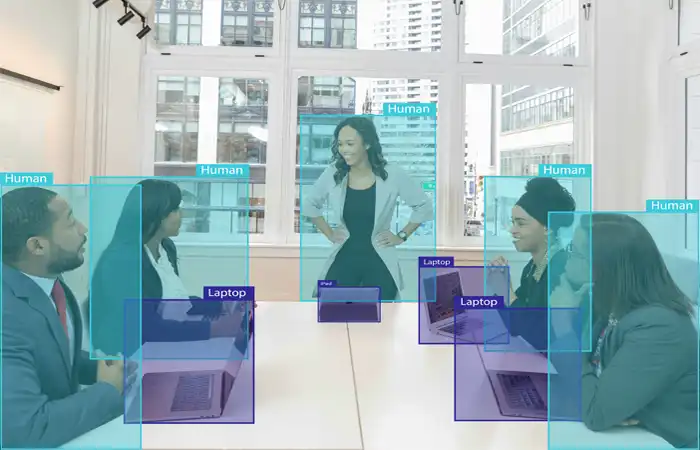
We offer precise 2D bounding box annotation for identifying objects in flat images and 3D bounding box annotation for spatial environments. These annotations are critical for applications like object detection, autonomous vehicles, and robotics, ensuring accurate recognition.
Polygon Image Annotation
With polygon image annotation, we label irregularly shaped objects with high accuracy, which is especially beneficial for semantic segmentation. This technique is commonly used in object detection tasks requiring precision, such as in autonomous vehicles and aerial imagery.
Polyline Annotation
Polyline annotation is ideal for annotating linear objects or paths, such as roads or pipelines. This technique helps in applications like semantic segmentation and object boundary identification, where defining boundaries and edges is essential for accurate AI-driven solutions.
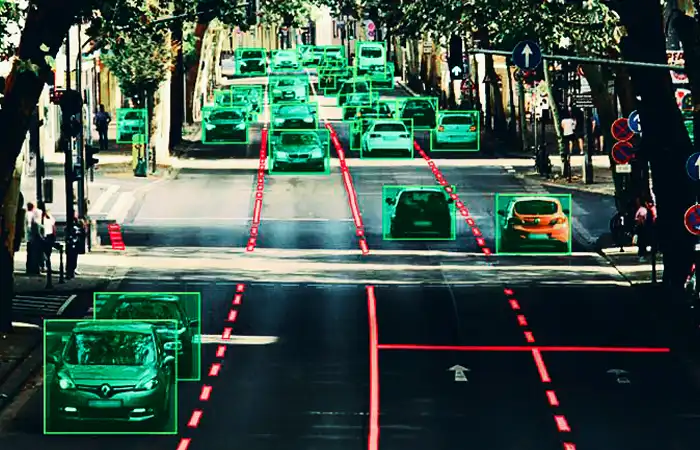
Image Classification
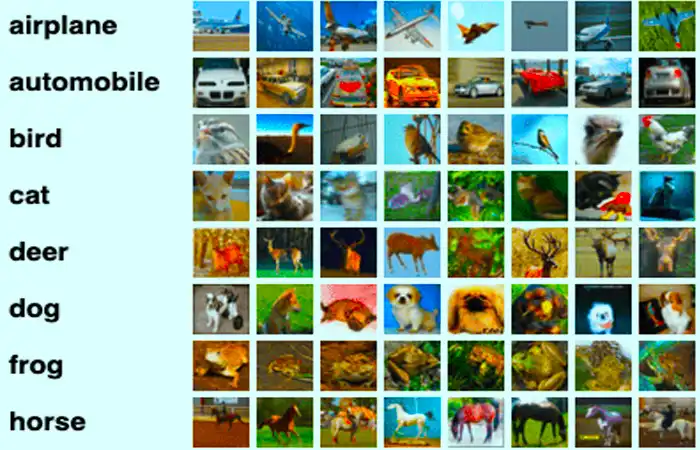
Image classification involves assigning a label to an entire image based on its content. This foundational technique is used for recognizing objects, scenes, and environments, facilitating tasks in AI, such as facial recognition, object detection, and automated sorting systems.
Object Detection
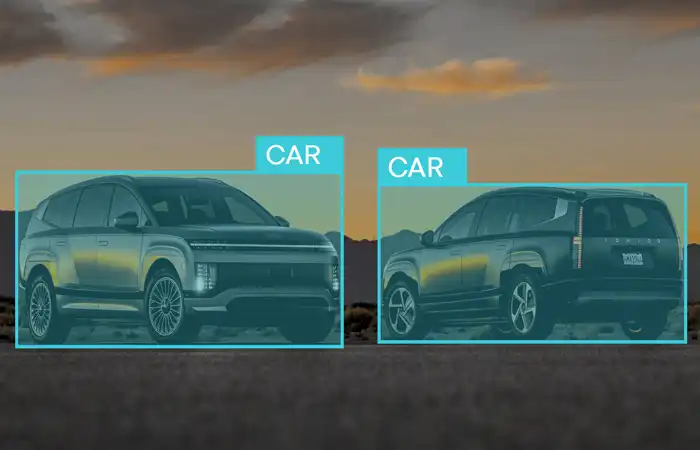
Object detection helps identify and locate objects within an image by drawing boxes or polygons around them. It’s essential for real-time applications like surveillance, autonomous driving, and inventory management, allowing AI to understand and react to objects in its environment.
Segmentation Techniques
Advanced pixel-level and instance segmentation pipelines engineered for complex spatial and temporal vision models.
Semantic Image Segmentation
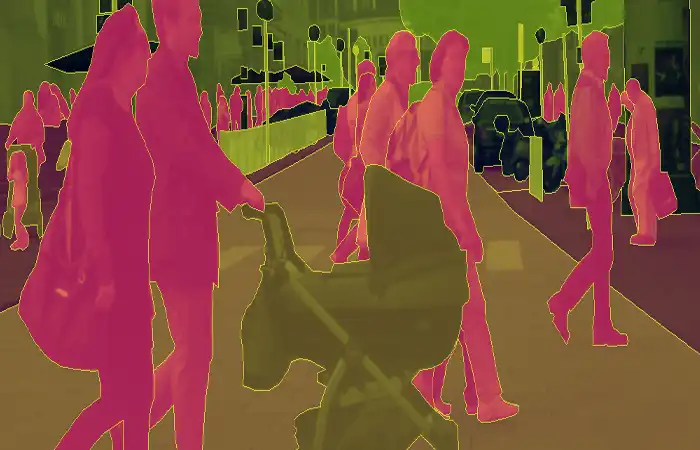
Semantic segmentation labels every pixel of an image, assigning a class to it (e.g., car, road, sky). This technique enables AI systems to comprehend the entire scene’s context, essential for autonomous vehicles, medical imaging, and urban planning where environment understanding is critical.
Instance Segmentation
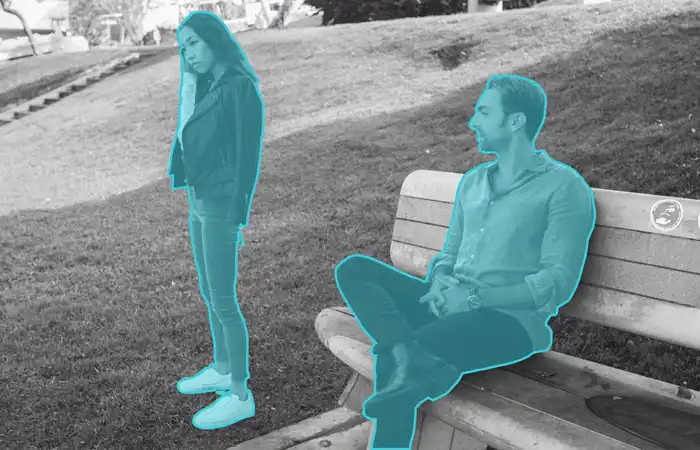
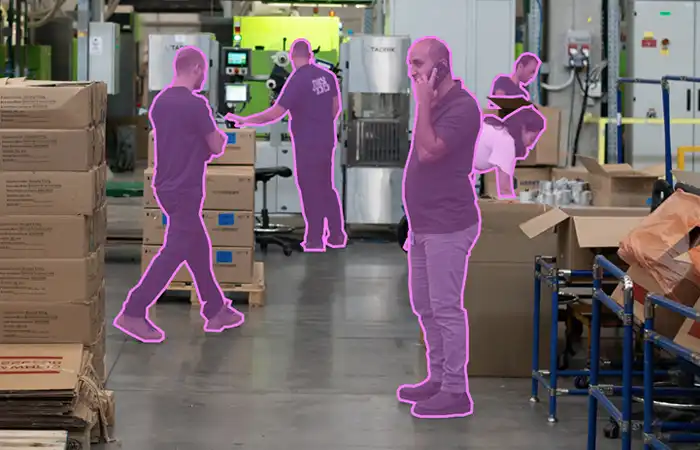
Instance segmentation takes segmentation a step further by distinguishing between individual objects within the same class. This technique helps in object tracking, counting multiple instances of objects, and providing pixel-level precision for complex environments, like crowded spaces or dynamic scenes.
3D Image Annotation
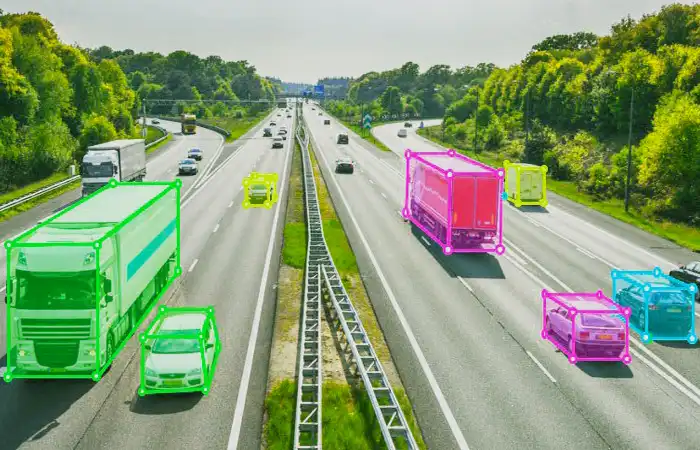
With 3D image annotation, we annotate 3D objects using 3D cuboid annotation and 3D point cloud annotation to give machines spatial understanding of real-world objects. These annotations are crucial for applications in robotics, autonomous navigation, and augmented reality systems.
3D Object Detection And Segmentation
Our 3D object detection and 3D segmentation services provide spatial insights into 3D environments, enabling more accurate object recognition and analysis in real-time. This is used in fields like robotics, autonomous vehicles, and drone navigation, where understanding the 3D world is essential.
Advanced Segmentation For AI Development
High-precision segmentation of overlapping objects and dense 3D environments for next-generation deep learning.
Instance Segmentation In Deep Learning
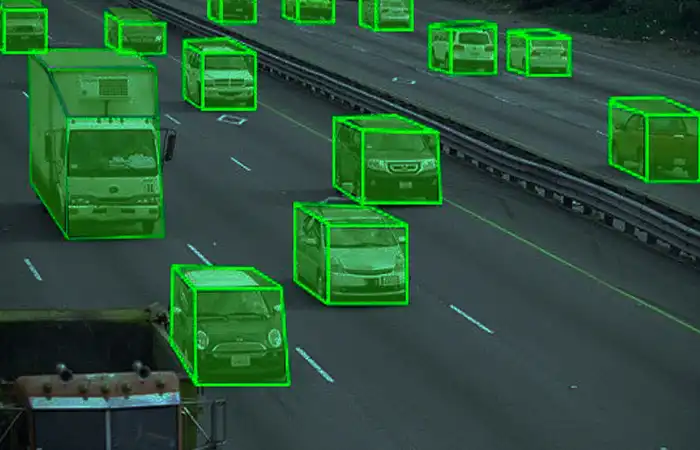
Instance segmentation in deep learning offers pixel-perfect accuracy, distinguishing individual objects within a group. This is used for tasks like object tracking, autonomous driving, and robotic navigation, where high-precision segmentation of overlapping objects is essential for the model’s success.
Spatial Mapping
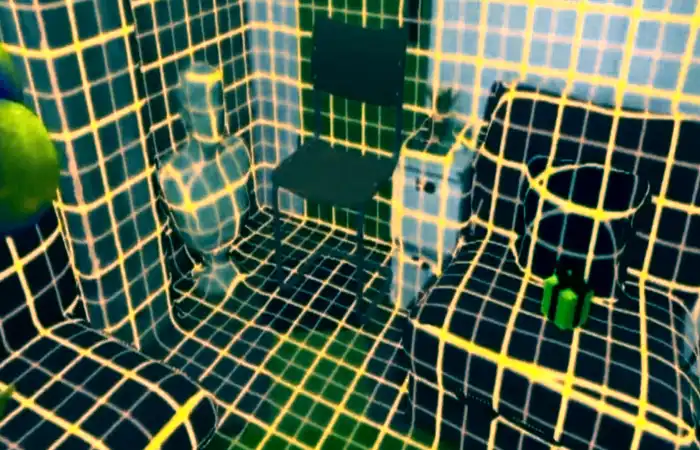
Spatial mapping involves creating 3D models from 2D images, helping AI systems understand physical environments. This service is crucial for industries such as augmented reality, robotics, and navigation, enabling real-time interaction with the physical world by providing a spatial understanding.
Specialized Annotation For Advanced AI Applications
Facial landmarks, human pose vectors, emotion states, and vehicle tracking for real-world automated systems.
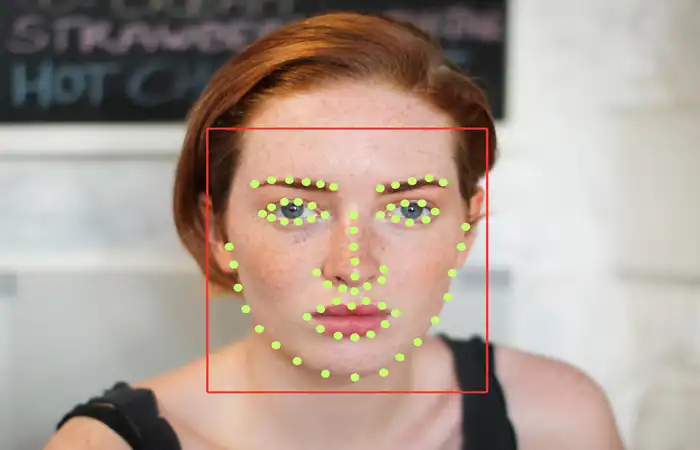
Facial Landmark Annotation
Facial landmark annotation identifies key facial features (eyes, nose, mouth) to enhance facial recognition and emotion detection. It is widely used in security, healthcare (e.g., diagnosing conditions), and customer engagement, offering a high level of accuracy for visual AI tasks.
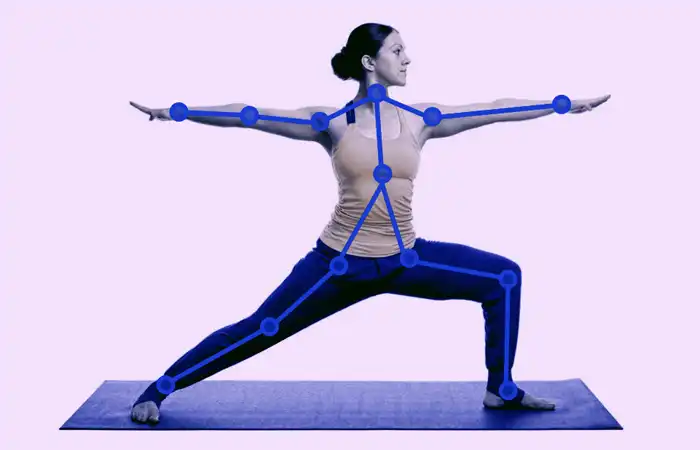
Human Pose Estimation
Human pose estimation involves annotating the positions of human body joints in both 2D and 3D, essential for applications in fitness tracking, motion capture, sports analytics, and security. This technique allows AI to track human movement and understand behavior across different environments.
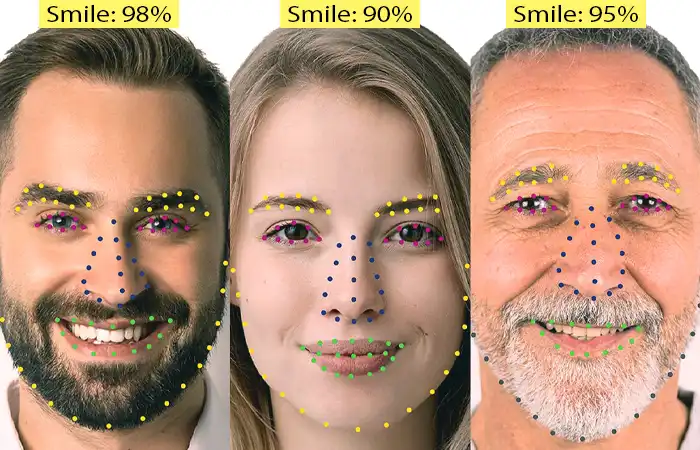
Emotion Recognition
Emotion recognition annotates facial expressions or body language to identify emotional states like happiness or anger. This technique is crucial for enhancing customer experience, mental health monitoring, and targeted marketing by allowing AI to respond to emotional cues in human behavior.
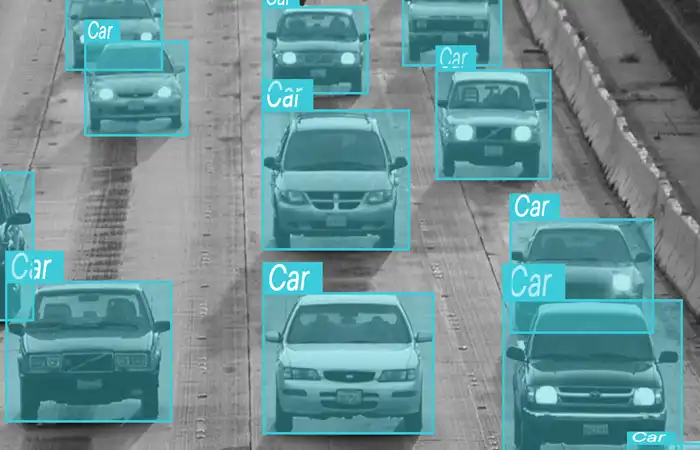
Vehicle Detection
Our vehicle detection services enable accurate identification of vehicles in images, a critical task for autonomous driving and traffic monitoring. We also provide 3D vehicle detection, which helps AI systems to understand the spatial positioning of vehicles, enhancing safety and navigation.
Which Industry Use Image Annotation Services
Discover how our customized annotation architectures empower machine learning deployments across key industry sectors.
Automotive
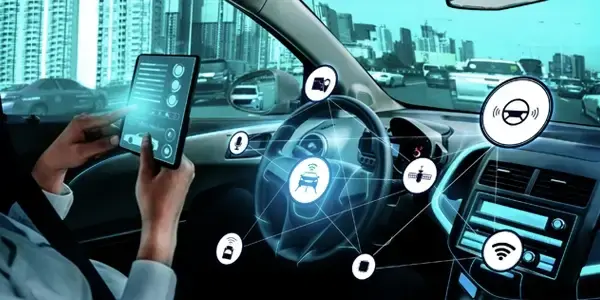
In the automotive industry, image annotation supports autonomous driving by labeling objects like vehicles, pedestrians, and road signs. This enables AI systems to understand their environment, improving safety and navigation in self-driving cars.

Security
In security, image annotation is crucial for surveillance systems to identify objects, vehicles, or people. Annotating surveillance footage helps in real-time monitoring, threat detection, and event analysis, ensuring public safety and security.

Healthcare
In healthcare, image annotation is used to label medical scans like MRIs and X-rays, assisting in disease detection, improving diagnostic accuracy, and ensuring compliance with medical standards for better patient care.

Agriculture
In agriculture, image annotation aids in labeling satellite or drone images for tasks like crop monitoring, pest detection, and yield prediction. This helps farmers make informed decisions for resource management and crop health optimization.

Ecommerce
For ecommerce platforms, image annotation helps in tagging and categorizing product images, making it easier for customers to search, improving product discovery, and enhancing inventory management for a smoother online shopping experience.
Manufacturing
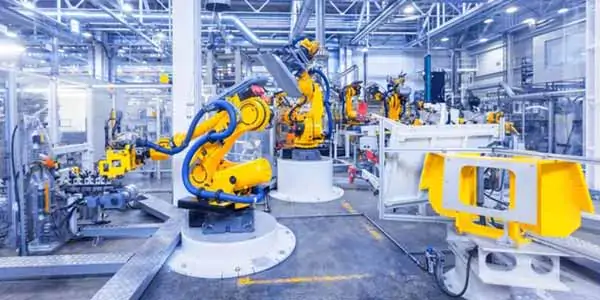
In manufacturing, image annotation helps with quality control by labeling product defects or assembly issues. This ensures defect-free production, optimizing automation systems and improving product consistency and safety.
Why Choose Us
Unparalleled Subject Matter Expertise: With unparalleled subject matter expertise, sevvenlabs delivers exceptional data annotation services across various domains. Our team of skilled professionals ensures that every project is handled with the utmost precision, offering deep insights and tailored solutions to meet your unique business needs, driving results.
Quality With Accuracy
Achieving Precision and Quality in Every Data Annotation Project for Your Business.
Quality With Accuracy
Tailored Data Annotation Solutions to Meet Your Unique Business Needs and Goals.
Customized Solutions
Affordable and Cost-Effective Pricing for High-Quality Data Annotation Services.
Frequently Asked Question
Have questions? Here is everything you need to know about our image annotation services.